South African military withdrawal from Angola
Another Day of LifeThe South African military withdrawal from Angola marked the end of the South African Army’s presence in the country, but not the end of the war. On 27 March 1976, its last units crossed back over the Cunene River; the retreat also exposed how the wartime front’s temporary arrangements gave way to the old racial order, while Angolans remained in a divided country still at war.
Background and Route
The withdrawal closed a period in which distant fronts depended on precarious roads and scant supplies. In the south, Comandante Farrusco’s unit numbered 120 men and was alone across a vast region; its route to Lubango was the only road through difficult bush, and retreat by other means was scarcely possible. Earlier, Rysiek had travelled that road with Diogenes, passing burned-out convoy trucks and facing the danger of ambush. The road later became the route by which the last South African units left Angola, linking the withdrawal to the landscape and fear of the campaign rather than presenting it as a distant change of policy alone.
The Withdrawal
The account dates the event to 27 March 1976 and states that the last South African Army units withdrew from Angolan territory. They returned along the same road Rysiek had once travelled with Diogenes and later with Farrusco. The departure closes a military presence; the text does not give a negotiated timetable or specify the terms of the withdrawal.
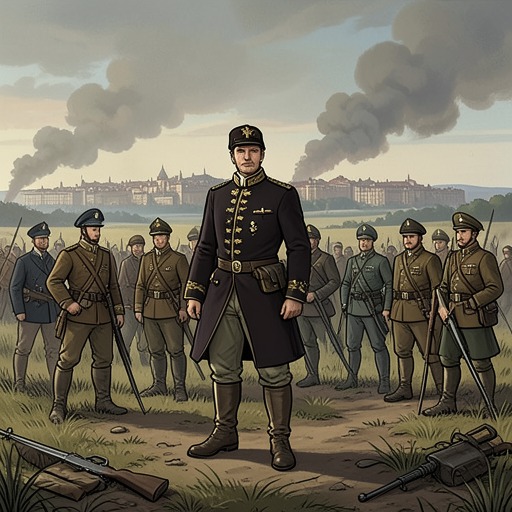
At the bridge over the Cunene River, Pieter Botha, the defence minister of the Republic of South Africa, reviewed the returning troops. The soldiers crossed in silence. At the same time, FNLA and UNITA units that had accompanied them crossed the river toward Namibia; many died in the crossing. The scene brings the withdrawal’s unequal outcomes into focus: the South African soldiers were returning across a border, while their Angolan companions were fleeing the country.
The Front After the Crossing
The river crossing also marks the end of the front’s temporary social order. With the South African soldiers’ return, passage over the bridge again followed segregation: it was reserved for white people. The contrast is stark. During the withdrawal, units that had fought alongside the South Africans crossed the same river, but the racial boundary that had been suspended in the wartime arrangement reasserted itself at the bridge.
The immediate military picture was calm on all fronts, but the personal aftermath remained unresolved. Rysiek believed Farrusco was probably alive: people in Lubango had hidden him during the invasion, and his wounds had healed. He did not know what had happened to Diogenes. Antonio and Carlos had been killed. These separate fates prevent the withdrawal from becoming a simple collective homecoming; the South African Army was leaving, but the people Rysiek had known on the front were scattered, wounded, dead, or unaccounted for.
A Withdrawal, Not an End to War
The book distinguishes the end of the South African presence from the end of conflict. The Cubans, too, had departed, but Angolans remained in a country divided and devastated by civil war. The account looks ahead from 1976 to 2000, describing a conflict that continued for decades and noting the substantial revenues each side drew from oil or diamond deposits. In this wider frame, the withdrawal is a decisive military change, not a resolution: foreign forces leave, the bridge closes along racial lines once more, and the war continues within Angola.